
London's planning framework has shifted. Green infrastructure is no longer a nice-to-have - it's a condition of development. And for many commercial projects, a green roof is the most efficient way to meet it.
Today’s developers, architects, and project managers face a dual regulatory framework. On one side is the national Biodiversity Net Gain (BNG) requirement under the Environment Act 2021. This demands a minimum 10% biodiversity uplift on all new developments. On the other is the London Plan 2021. It sets out a 20–25 year strategy for sustainability and growth across the capital. Within it, the Urban Greening Factor (UGF) promotes high-quality greening in urban areas. Policy G6 goes further, aiming to protect and manage London’s natural environment. Together, these policies put green infrastructure front and centre.
But let’s step back for a moment. Green roofs have changed enormously. In the early 1990s, they largely meant sedum blanket systems. These were innovative at the time and helped developers hit early sustainability targets and achieve BREEAM certification. But that was 35 years ago. The goalposts have shifted.
Today, the focus isn’t just “green coverage.” It’s about measurable biodiversity, habitat creation, and ecological performance.
That shift is central to how Q&S approaches green roofing. Not as decorative infrastructure, but as a practical tool and a functioning urban habitat.
Jump to:
- What is a Green Roof?
- What is a Traditional Commercial Roof?
- Why London's Planning Rules Are Changing the Game
- Green Roofs vs Traditional Roofs: How do they compare?
- Which Green Roof is Right for Your Development?
What is a Green Roof?
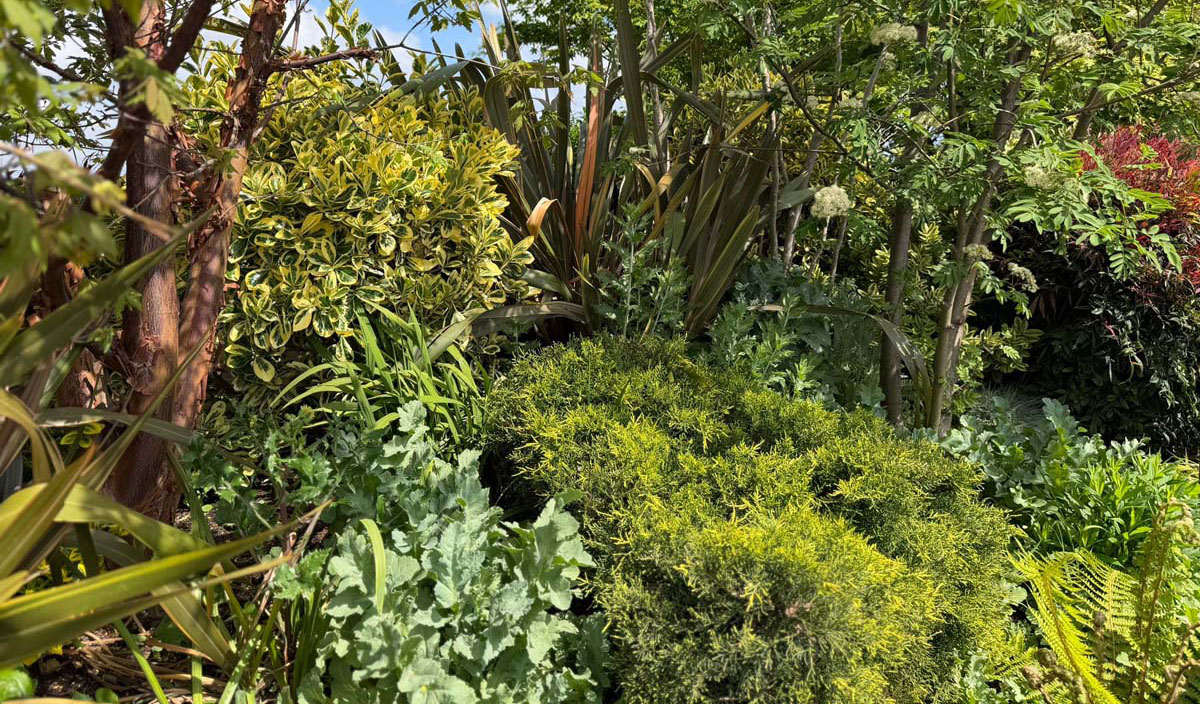
Green roofs, sometimes called living roofs, are layered systems that support vegetation on top of a waterproof membrane. They protect the building beneath them and deliver ecological and environmental benefits in areas where ground-level green space is limited.
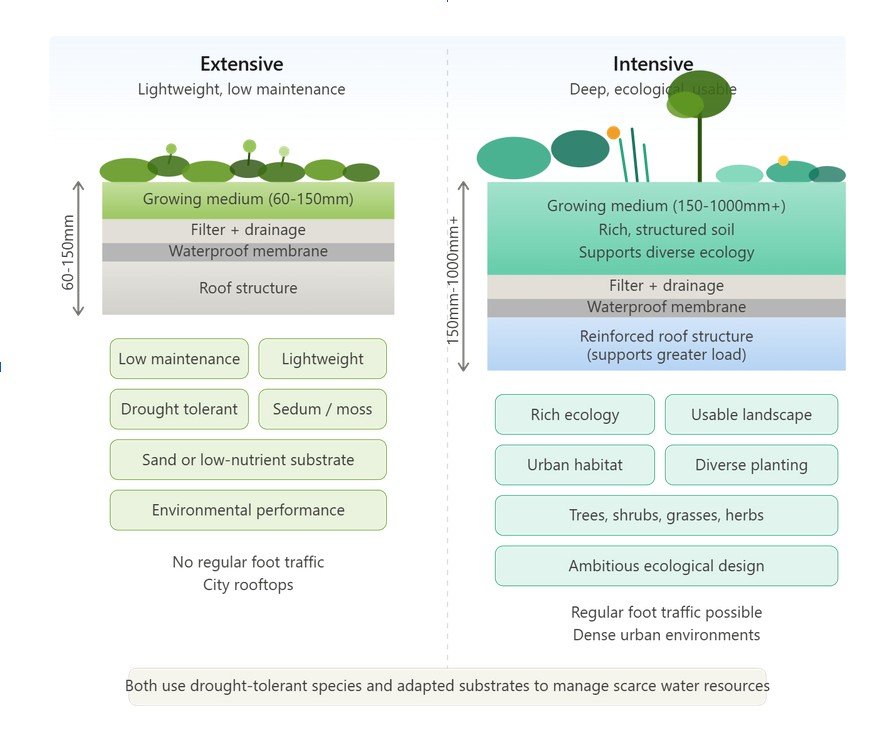
In commercial settings, green roofs fall into two main categories, Extensive and Intensive.
Extensive Green Roofs
Extensive green roofs are lightweight and shallow. They are typically covered with sedum or moss. They are designed for environmental performance rather than regular foot traffic. They work well on city rooftops where low maintenance and light weight matter most.
At Q&S, we design planting schemes using diverse, drought-tolerant species and adapted substrates. Water is a scarce resource in urban environments. The top of a building can’t always support heavy irrigation. So, we explore alternative growing mediums, such as sand-based or low-nutrient substrates. These encourage slower, more resilient plant growth. They also support better long-term adaptation to rooftop conditions.
Intensive Green Roofs
Intensive green roofs are deeper and more complex. They support richer ecological environments and can double as usable landscape space.
These systems allow for ambitious ecological design. But today, the goal isn’t just visual appeal. It’s about creating habitat in dense urban areas.
Below is a side-by-side comparison of both.
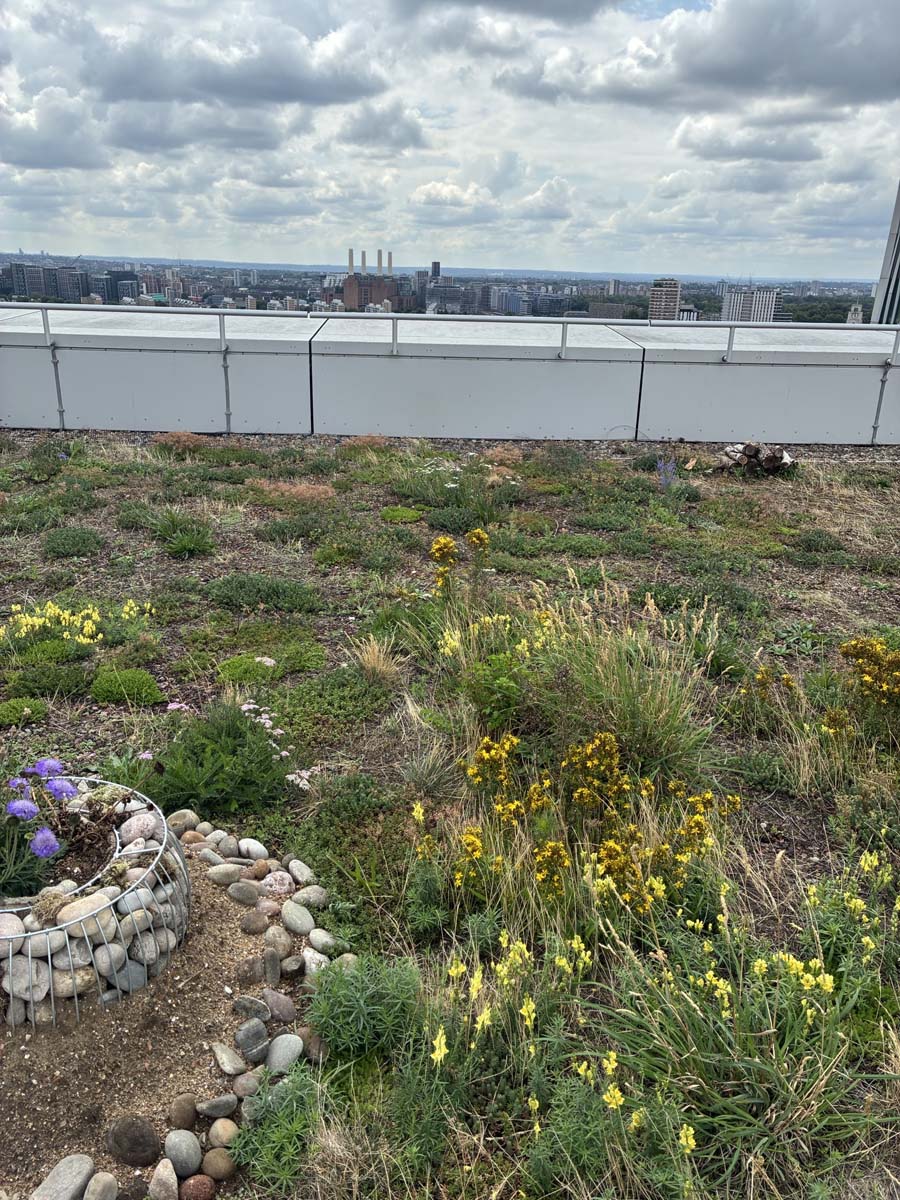
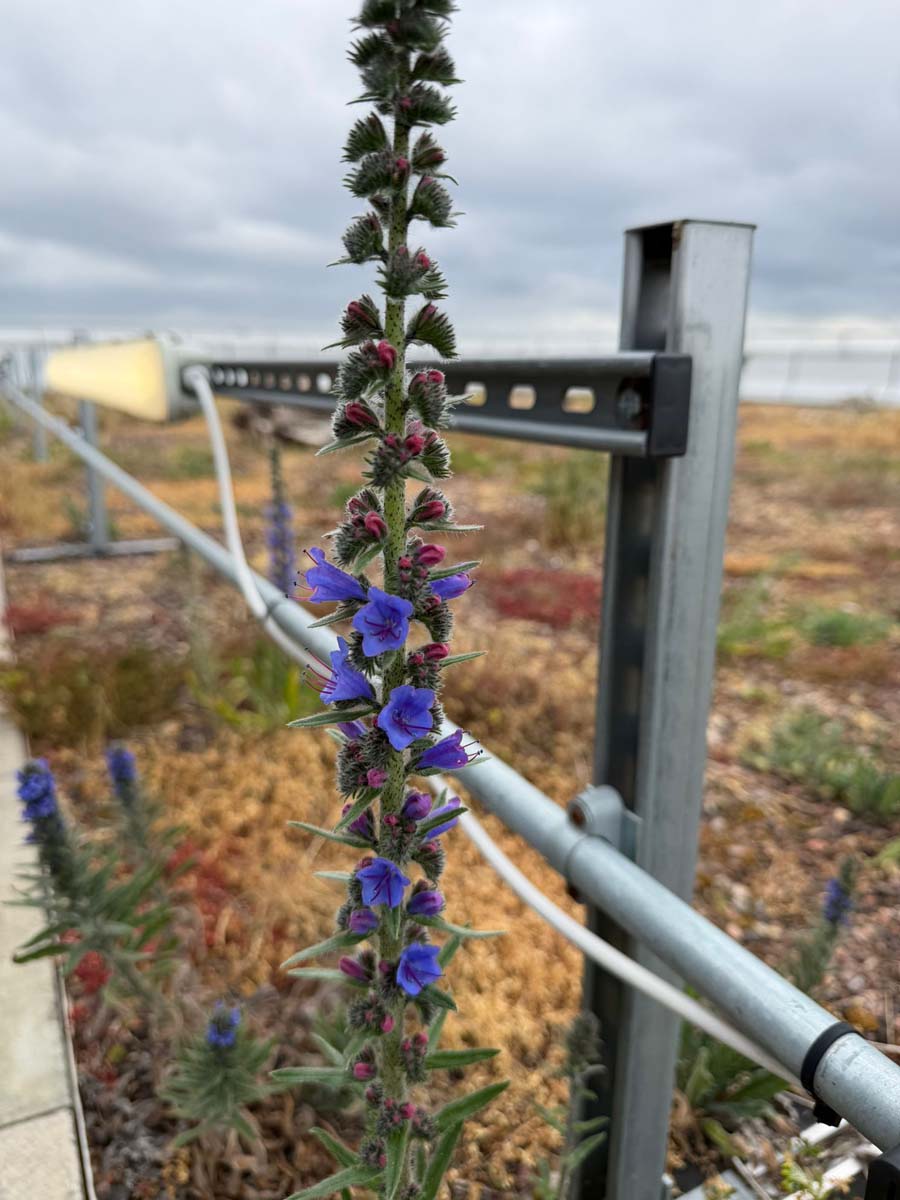
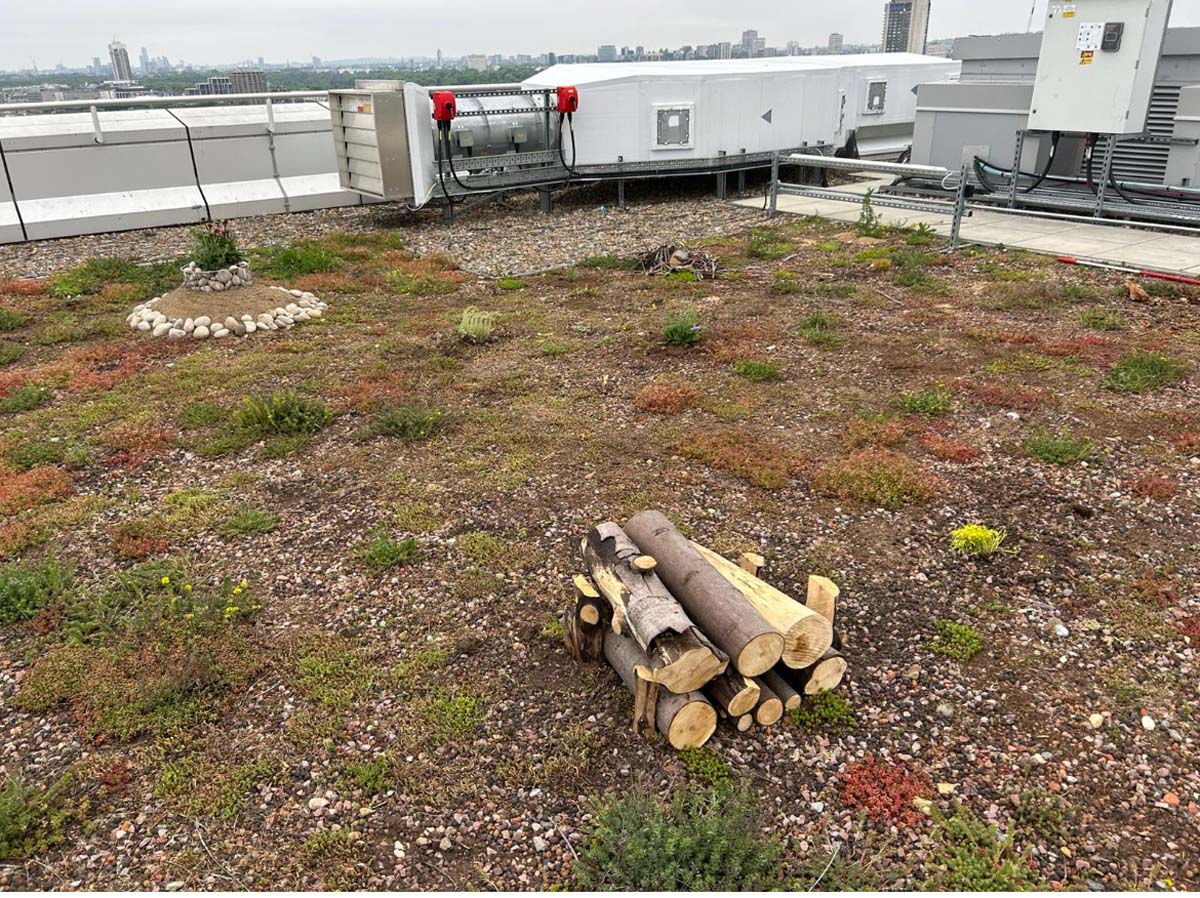
Green Roof Case Study: N2 Building, Victoria, London
Solution
- Designed sand mounds for solitary bee nesting
- Pebble banks and deadwood habitat zones
- Gabion structures filled with sand & aggregate
- Drought-tolerant perennial planting schemes
Outcome

Get in touch today about our Green Roofing Service!
What is a Traditional Commercial Roof?
Traditional commercial roofs are generally flat, built from materials such as bituminous felt, single-ply membranes, asphalt, or metal. They are still widely used for practical reasons. Upfront costs are lower. Construction is quicker. And industry standards are well established.
But here's the problem. Traditional roofs offer no ecological value - no habitat function, no contribution to Biodiversity Net Gain, and no compliance with the Urban Greening Factor.
In the context of London planning, that list of shortfalls is growing more significant every year.
We can help though. Email
The Biodiversity & Planning Case - Why This Matters, especially in London
What is Biodiversity Net Gain (BNG) and why does it affect me?
Under the Environment Act 2021, most new developments must deliver a minimum 10% BNG.
In simple terms, BNG asks developers to show at least a 10% uplift in biodiversity value. That means creating or enhancing habitats for birds, insects, and wildlife. These must go above and beyond pre-development conditions.
For developers, this creates a real challenge:
- Urban sites often have little space for eco-improvements
- Biodiversity offsets can be expensive and logistically complex
- Design changes to meet BNG targets can be costly and disruptive
So, green roof space in London becomes highly valuable. They let developers create new biotopes within the building’s own footprint and help meet BNG requirements without losing usable space.
Green roofs contribute directly by:
- Creating new habitat areas in dense urban environments
- Supporting pollinators and invertebrates
- Increasing ecological connectivity across fragmented city landscapes
“The London Layer”: Urban Greening Factor + Policy G6
BNG sets the UK baseline. But London adds another layer of planning policy. This makes green roofs even more strategically important.
The Urban Greening Factor (UGF), introduced in the London Plan 2021, is a scoring system. It requires developments to achieve a set level of urban greening. Each type of green infrastructure gets a score - trees, planting, green roofs, permeable surfaces. Developments must hit an overall target based on their type and location.
Green roofs are one of the most efficient ways to boost a development’s UGF score. They:
- Add greening to otherwise unused roof space
- Contribute consistently across large surface areas
- Can be designed to deliver both visual and ecological value
Alongside this, London Plan’s Policy G6 explicitly supports green roofs and walls. It encourages developers to include them as part of a broader biodiversity and climate resilience strategy.
In practice, for many London developments, a green roof isn’t just beneficial, it’s often the most straightforward way to achieve a compliant planning outcome.
Biotope Creation in Urban Sprawl
By early 2026, almost half of London was classified as green or blue space. Gardens, parks, rooftop terraces, woodlands, and rivers. That makes London one of the world’s greenest cities. It’s great news, but the reality is more complex.
Much of that green space is fragmented. Patches sit isolated from one another. For wildlife, this is a critical problem. As ecosystems and habitats shrink and become disconnected, species struggle to survive.
Green roofs help by creating new, connected biotopes above street level. When designed well, they can support:
- Pollinators such as bees and butterflies
- Birds and foraging species
- Invertebrates that form the base of urban ecosystems
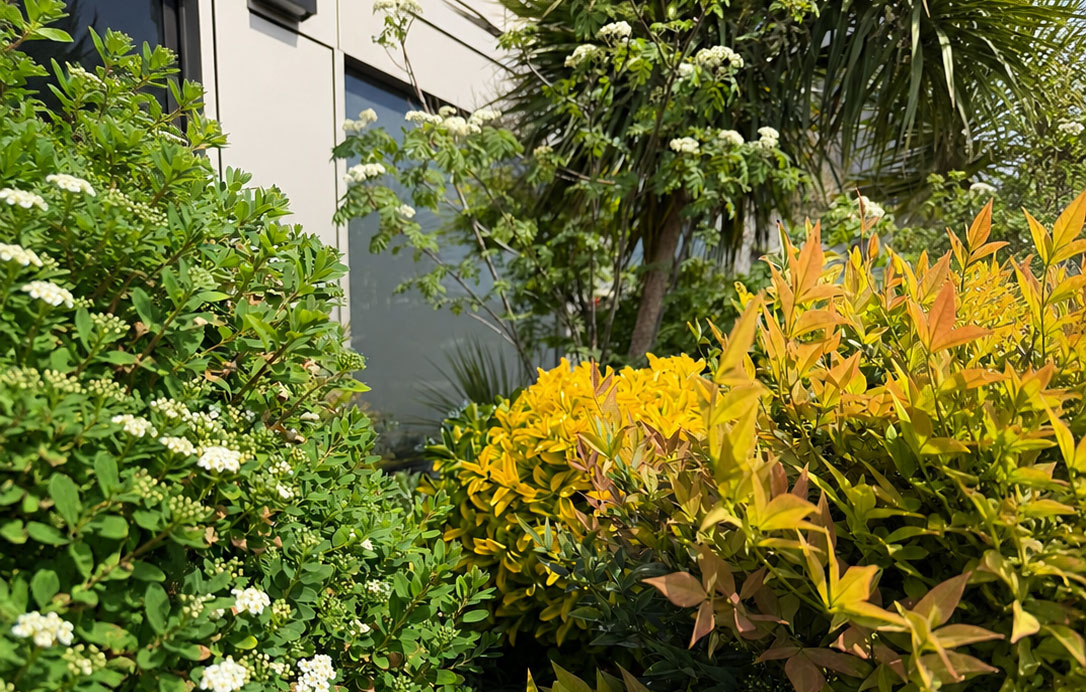
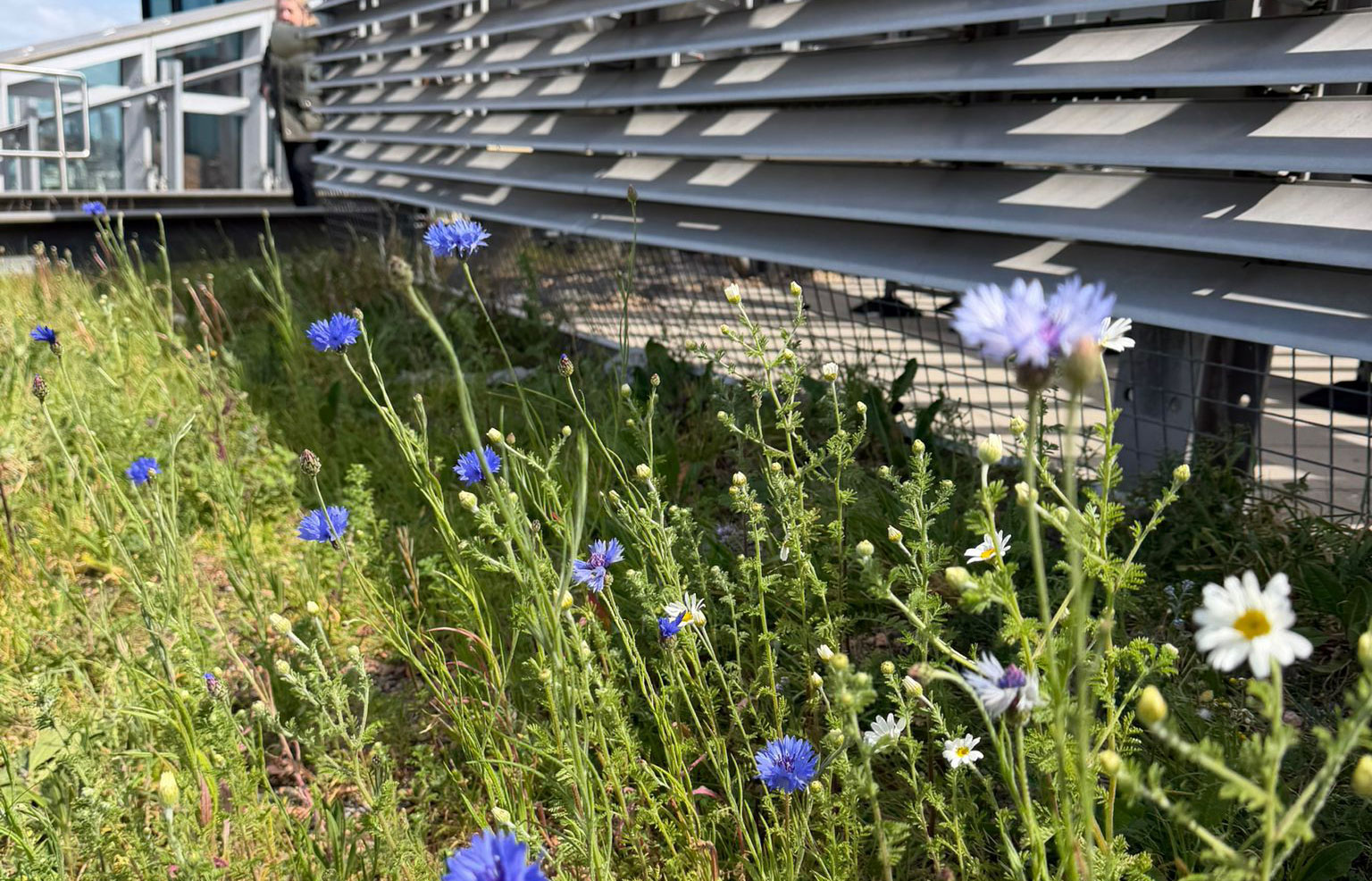
The shift from uniform sedum roofs to diverse, ecologically-led schemes makes the difference. Native and drought-tolerant species, varied substrates, and features like sand zones or deadwood all add measurable value.
A well-designed green roof isn’t just a surface. It’s part of London’s wider ecological network.
Green roofs also address environmental challenges that are increasingly urgent in London:
Air Quality, Carbon & Climate:
Leaves and bark act as filters. They capture tiny particles from traffic and industrial emissions. They absorb harmful gases such as nitrogen dioxide, sulphur dioxide, and carbon monoxide. This helps improve local air quality. Green roofs also contribute to carbon reduction through vegetation growth, carbon absorption and carbon capture. And they reduce building energy needs through natural insulation.
Increasingly Hot Summers:
Traditional roofing materials absorb and retain heat. This contributes directly to the urban heat island effect - a well-documented problem across London and other dense cities. Green roofs provide natural cooling through shade and evaporation, helping to counteract urban heat island conditions at a building level. The UK Met Office puts the chance of temperatures reaching 40°C again within the next decade at 50%. Buildings need to be designed with heat resilience in mind.
A Smarter Route Through Planning
In many London boroughs, planning officers expect a clear urban greening strategy. Including a green roof early shows your development is aligned with policy and environmental priorities. It strengthens your planning permission application and reduces the risk of objections.
By contrast, adding biodiversity measures late in the process often leads to:
- Compromised design solutions
- Increased costs
- Delays in approvals
Green Roofs vs Traditional Roofs: How do they Compare?
Upfront Costs and Installation
Traditional roofs are often seen as the lower-cost option. But the gap has narrowed. When you compare high-spec flat roofing with extensive green roofs, costs often overlap, especially when the latter are specified early in the design process.
More importantly, green roofs can reduce or eliminate the need for separate biodiversity mitigation measures. So, the real comparison isn’t just installation cost. It’s overall project cost and planning efficiency.
Lifespan and Maintenance
A typical traditional commercial roof lasts between 15 and 25 years. A well-designed green roof can exceed 40 years. That’s largely because the waterproofing layer is protected from UV exposure and temperature fluctuations. Viewed as a cost-per-year investment, green roofs often deliver stronger long-term value, even after accounting for periodic maintenance. When you factor in long-term savings on energy, drainage, and biodiversity compliance, the ROI case for green roofing becomes even more compelling.
Energy Performance
Green roofs act as a natural insulating layer. They help stabilise internal building temperatures year-round and in winter reduce heat loss. In summer, they limit solar gain and overheating. For commercial buildings in London, where energy costs are high, this can lead to measurable reductions in heating and cooling demand. It can also improve building performance ratings.
Weight and Structural Considerations
Weight is one of the key practical differences between roof types.
Traditional roofs are lightweight. Green roofs - particularly intensive systems - add significant load. For retrofit projects, this can mean a structural assessment and, in some cases, reinforcement. However, designing for a green roof from the outset is far more cost-effective than retrofitting later.
Stormwater and Drainage
Green roofs play an important role in stormwater management. They absorb and slow runoff before it reaches the drainage system. This supports sustainable urban drainage across London, where ageing Victorian infrastructure is under pressure and surface water flooding is growing more common.
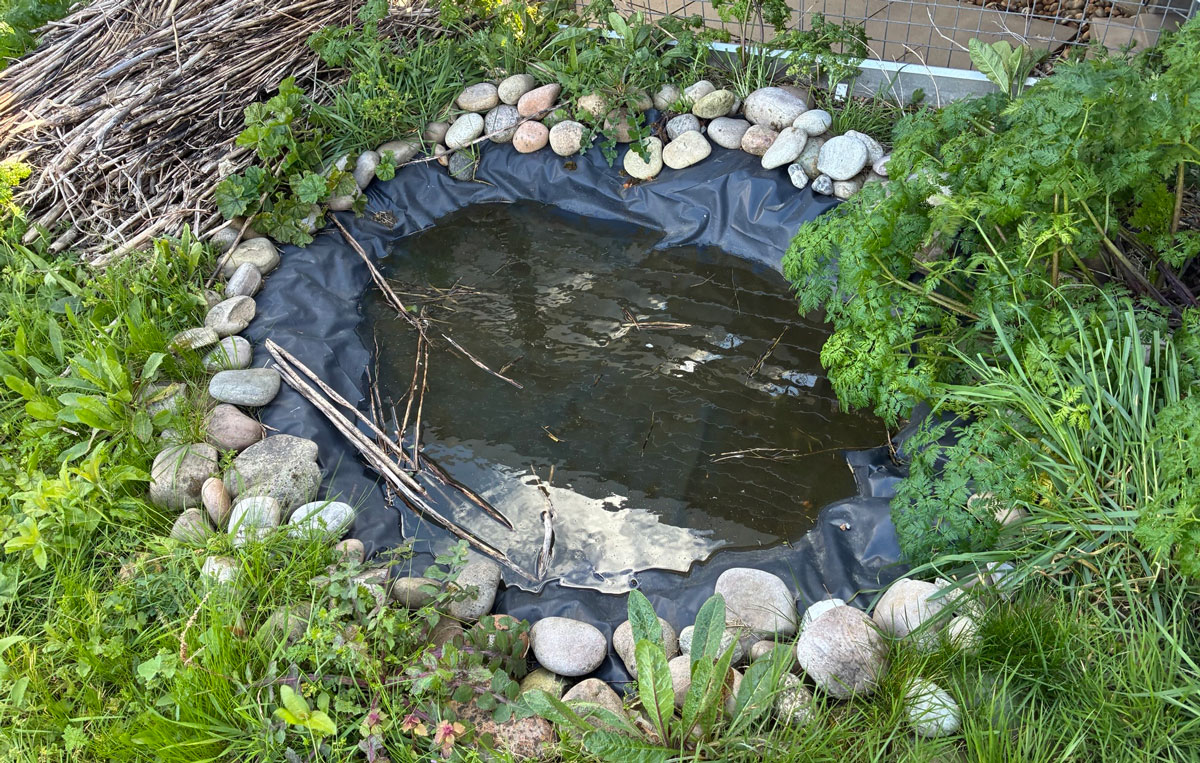
We’re often asked to design green roof systems with drought-tolerant planting and habitats, and no irrigation system required. Creating bespoke water harvesting systems to gather water; collecting runoff, filtering the debris and storing in a tank, small pond or barrel. Reducing overall water demand.
SuDS, Rain Gardens and the Sponge City Approach
But water pressure is only going to grow. The UK’s rainfall patterns are changing and we’re seeing heavier downpours occurring more frequently. For developers, that’s a front-of-mind design challenge. Tomorrow’s buildings need drainage systems built for tomorrow’s weather.
The answer lies in working with water, not against it. Sustainable Drainage Systems (SuDS) - including rain gardens, soakaways, porous pavements, and bioretention areas - mimic the way natural land absorbs rainfall. Rather than rushing runoff into overloaded pipes, they capture, store, and release it slowly back into the ground. It’s a low-impact, cost-effective approach to green drainage design that builds resilient communities and protects the wider environment.
This thinking sits at the heart of the “sponge city” concept: a nature-based solution that absorbs rainwater at source, reduces flood risk, and eases drainage pressure. China has already taken it to scale, with 264 cities now operating on sponge city principles, targeting 80% of urban areas by 2030. Closer to home, the Greater London Authority’s Sustainable Drainage Action Plan actively supports this approach across London.
For developers and architects, building in green drainage strategies from the outset is fast becoming an expectation.
Which Green Roof is Right for Your Development?
In our experience, the decision comes down to four things:
- The building’s structural capacity
- The planning expectations of the relevant London borough
- Your Biodiversity Net Gain targets
- How (or if) you plan to use the roof space
Both extensive and intensive green roofs can deliver real value. The right choice depends on how these factors come together.
Extensive Green Roofs - When is This the Right Choice?
An extensive green roof is often the most practical and efficient starting point. It provides a clear route to meeting planning requirements without adding unnecessary complexity or cost.
An extensive system is usually the right fit when structural capacity is limited. Or when reinforcing the building to carry extra load would be disproportionate to the value gained. At around 60–150kg per square metre, these systems can sit on a wide range of buildings without major structural work.
They also suit projects where the main goal is BNG compliance and Urban Greening Factor contribution - rather than creating a usable space on the top of your building. With the right planting approach, moving beyond basic sedum to more diverse, drought-tolerant species, extensive roofs can still deliver strong ecological value at a fraction of the cost and complexity of an intensive alternative.
Where regular roof access isn’t needed, extensive systems make even more sense. They are designed as habitat and environmental infrastructure first. Maintenance is low, typically just one or two visits a year.
Cost is another important factor. At roughly £50–£120 per square metre, an extensive green roof is often the most accessible route to creating a green space. In many cases, it sits alongside the cost of a high-quality traditional flat roof.
This makes them particularly well-suited to industrial, logistics, and lower-rise commercial developments across East London, Park Royal, and the outer boroughs, where scale, efficiency, and compliance are the primary drivers.
Intensive Green Roofs - When is This the Right Choice?
Intensive green roofs require greater investment. But they also offer a different level of return: in biodiversity, amenity, and commercial value.
They work best on higher-profile developments or where the roof plays a visible role in the overall scheme. In central London locations such as the City or Canary Wharf, rooftops are often overlooked by surrounding buildings. Aesthetic quality and landscape design matter.
An ugly grey, vent-covered rooftop view from your window is not an inspiring prospect.
From a planning perspective, intensive green roofs are especially valuable where BNG or UGF targets are more ambitious. Deeper substrates, varied planting, and more complex habitat features allow these systems to achieve significantly higher biodiversity scores than simpler options.
They also come into their own where the roof is intended as a rooftop garden, organic growing space, or amenity area for tenants, shoppers, or visitors - perhaps as part of a Section 106 or community infrastructure obligation. Intensive roofs can turn otherwise unused space into something commercially and socially valuable, and in many cases contribute directly to improved property value for the building.
We’ve seen this at a roof terrace in Westminster. Seeds grown in a Q&S greenhouse have produced fresh, seasonal vegetables, picked at their peak and served within hours at the building’s on-site Landing Café a few floors below. By planning crops with the café chef months in advance, the greenhouse became part of the menu - full circularity from plant to plate.
That said, at 150–500kg per square metre, intensive systems are significantly heavier. This can make retrofitting challenging. For new builds, it’s far less of a constraint. Designing the structure to accommodate an intensive roof from the outset lets architectural and ecological ambition align from day one.
They are also a strong fit for developments with public-facing sustainability goals; whether that’s BREEAM certification, ESG commitments, or a broader net zero strategy. In these cases, a well-designed intensive green roof becomes a visible and measurable part of the building’s environmental performance.
Green Roof vs Traditional Roof: At-a-Glance Comparison
| Feature | Extensive Green Roof | Intensive Green Roof | Traditional Roof |
|---|---|---|---|
| Approximate Cost per m² (*prices as per 2025) | £50–£120* | £120–£300+* | £50–£150* |
| Typical Weight Loading | 60–150 kg/m² | 150–500 kg/m² | 20–50 kg/m² |
| Maintenance Frequency | Low (1–2 visits/year) | Moderate to high (regular upkeep) | Low (periodic inspections) |
| BNG & UGF Contribution | Moderate (can meet compliance with good design) | High (supports strong BNG and higher scores) | None |
| Accessible Space | No (not designed for regular access) | Yes (can be designed as usable amenity space) | No |
| Suitability for Retrofit | High (often possible without major structural changes) | Limited (may require significant reinforcement) | High |
| Typical London Use Case | Industrial units, logistics hubs, large commercial roofs in outer boroughs | Offices, mixed-use developments, high-profile central London schemes | Legacy buildings, basic commercial developments |
In practice, many of the most effective schemes combine both approaches. Extensive sedum roof covers most of the footprint. Targeted intensive areas are added for terraces or plant rooms where access, visibility, or ecological value justify it.
What’s Next?
By now, the key differences are clear. But the right solution isn’t about choosing the “best” system in isolation. It’s about selecting the one that aligns most closely with the demands of your development.
In practice, four key factors usually drive that decision.
Structural capacity: Whether you are working with an existing building or designing a new one, the load-bearing capability of the structure plays a central role. It determines what’s feasible and how cost-effective different options will be.
Planning context: Requirements can vary between London boroughs and other UK Local Authority boroughs. Expectations around Biodiversity Net Gain and Urban Greening Factor scores will influence both the type and specification of the green roof system.
Sustainability ambitions: For some projects, the focus is on achieving compliance efficiently. For others, it’s about delivering measurable BNG gains, supporting ESG commitments, or contributing to certifications such as BREEAM.
Intended use: Whether the roof is purely functional, or expected to serve as an amenity, a visual feature, or part of the building’s wider offering - that intended outcome will shape the right design approach.
The right solution is always project-specific. It depends on the building, the borough, the planning conditions, and the wider ambition for the development.
That’s why the Q&S team typically works with project teams at an early stage. We assess these variables and shape a green roof strategy that supports both compliance and long-term value from the outset.
How Q&S can help
Looking to arrange green roof installation across London or the South East as part of a new build or commercial refurbishment?
Q&S Commercial Landscaping works with developers, architects, and project teams to design, install, and maintain green roof systems that are aligned with both planning requirements and long-term performance goals.
From early-stage design input through to installation and ongoing maintenance, we focus on creating dream green roofs that deliver measurable value. That means improving energy efficiency, enhancing biodiversity, and contributing to a more resilient urban environment.
Learn more about our specialist services: https://qslimited.com/specialist-services
Email
