The Bee Wolf Exposed at Green Park Village

Meet the Bee Wolf. Despite the name, she's not a bee but a solitary wasp, and a striking one at that.
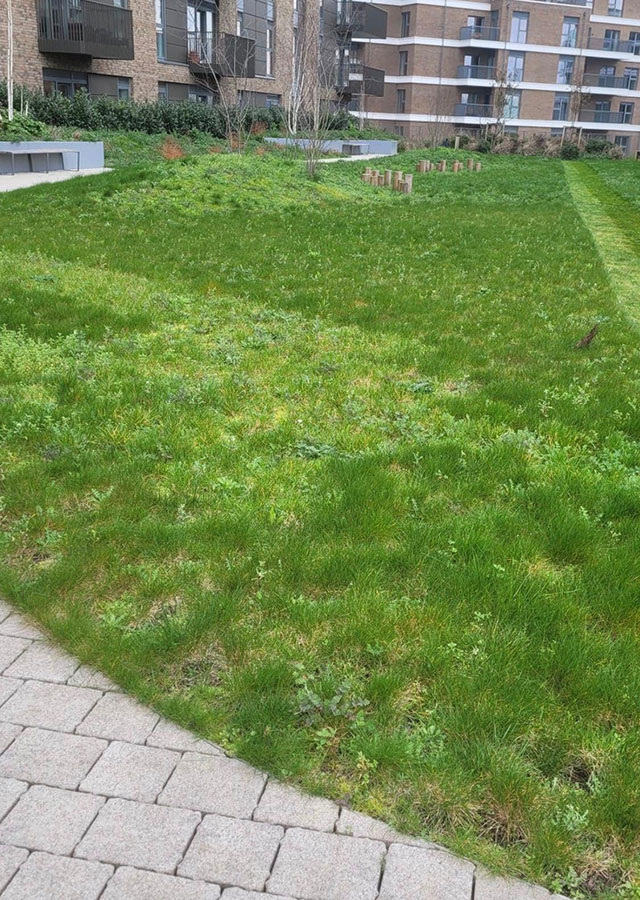
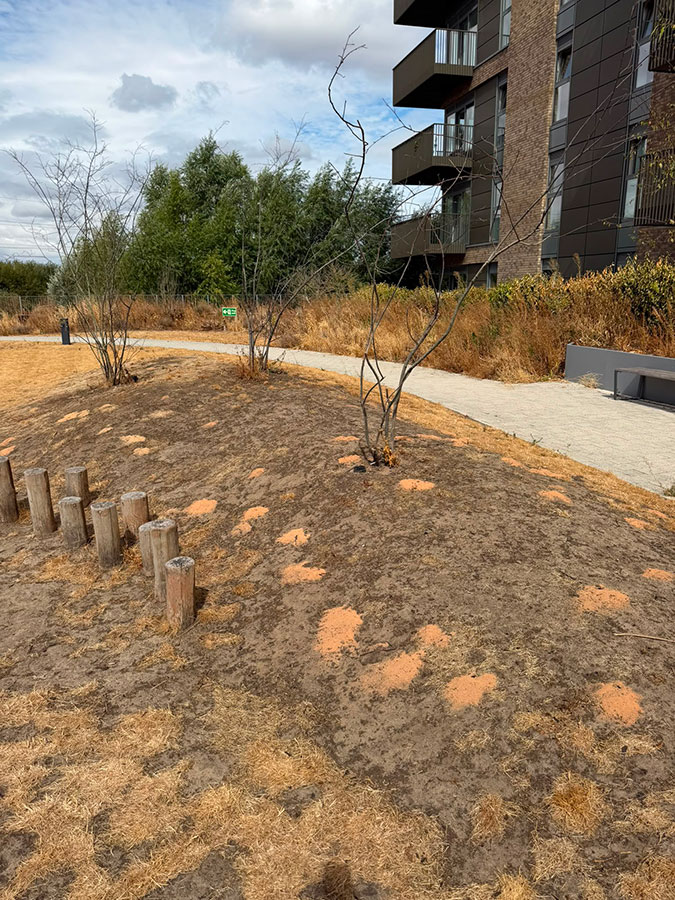
This summer’s heatwave left Bankside Gardens, Green Park Village particularly dry, with the raised podium planting areas among the most affected.
As the wildflower planting there died back, it exposed something we didn’t know was there: burrow entrances, some over a metre deep, dug into the loose, sandy substrate beneath. And two of these mounds show clear signs of active nesting.
Pollinating London Together’s Ecologist, Joris Rockx recently visited the site and said “it’s great to see such a healthy aggregation of bee wolves at Green Park Village. Bee wolves are fascinating solitary wasps, and it is not something you often get the opportunity to see in an urban green space. We’ve seen more bee wolves than usual during our surveys in London this year but have not seen any nests, so it was particularly interesting to find an established nesting site here.”
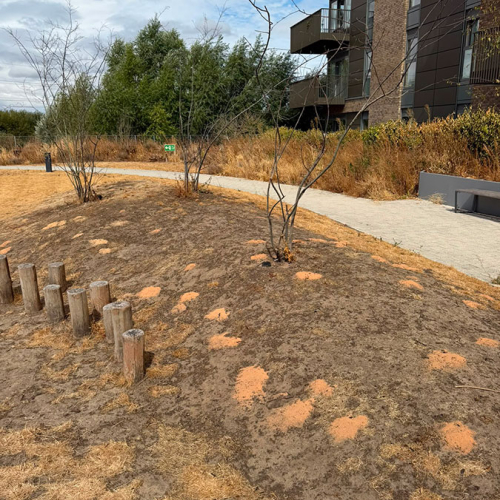
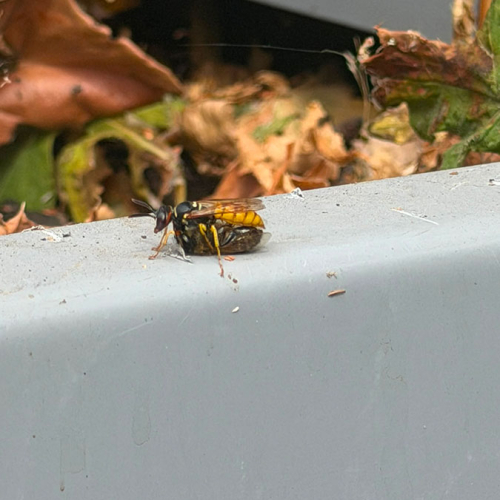
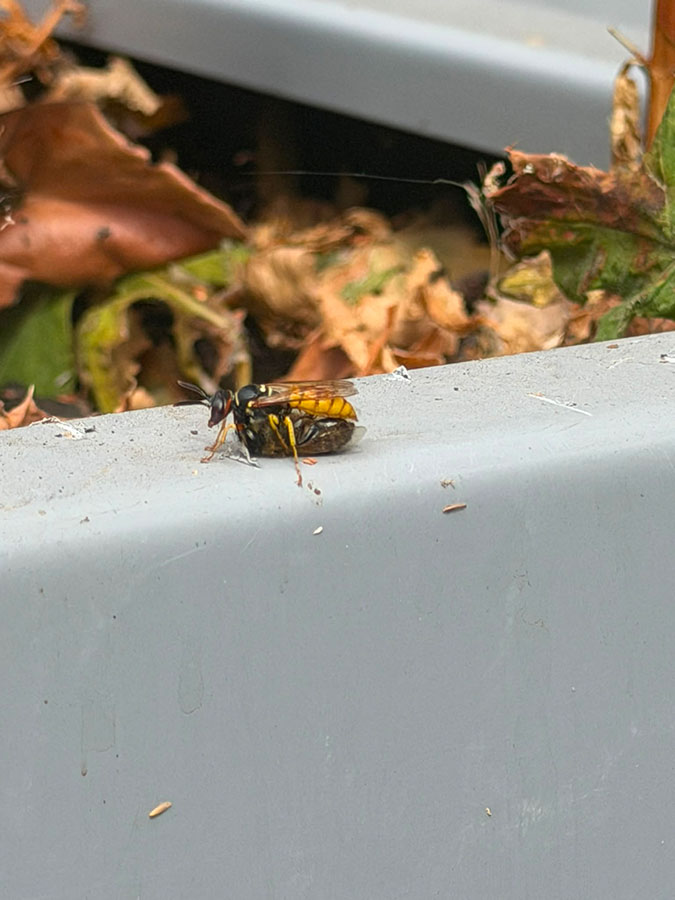
The female Bee Wolf is unmistakable; she has bright yellow and black stripes with a distinctive red mask behind her eyes, and a set of thick antennae. And she’s a hard worker. She burrows deep into the sand, excavating up to 34 side chambers, then heads out to hunt. Her prey? The honeybee. She paralyses it with a sting and, between flights, drags it back to her chamber, where she lays a single egg on it before sealing the entrance behind her. When the larva hatches, its first meal is ready and waiting.
It might sound brutal, but it's a vital piece of the puzzle. UK honeybee numbers have risen sharply in recent years - registered hives are up 40% since 2015 - and that growth can crowd out native, wild pollinators trying to share the same resources. Predators like the Bee Wolf help keep that balance in check, all while pollinating as they go, carrying pollen between plants as they rummage about. And importantly, she poses no risk to people - she doesn't sting humans.
As soon as we spotted the mounds, our team cordoned off the area to protect them from disturbance or accidental trampling. We're now working with our client's support to survey the site properly and plan for its long-term protection, with information signs planned to help residents understand what they're looking at and why to leave the area undisturbed.
A brilliant reminder that even the driest, trickiest conditions can reveal something worth protecting; you just have to know what you’re looking at.
We’ll let you know of any more pollinator updates at Bankside Gardens soon.